Core Web Vitals Monitoring: Why Website Performance Is Never "Finished"
Technical SEO Is No Longer a Quarterly Task
A few years ago, running a technical SEO audit every few months was enough for many businesses. Today, websites change constantly. New landing pages are published, code is updated, third-party scripts are added, and design changes happen more frequently than ever. Even a small deployment can introduce issues that affect search visibility without anyone noticing.
That's why technical SEO has evolved from a one-time checklist into an ongoing process.
Instead of waiting for rankings to drop before investigating a problem, businesses are shifting towards continuous monitoring that detects technical issues as they appear. This proactive approach helps teams fix problems before they begin affecting users or search engines.
Friction Labs was built with this mindset. Rather than producing a static audit report, it continuously evaluates website health and highlights issues that require attention, giving marketing and development teams actionable insights in real time.
Why Technical SEO Matters More Than Ever
Google's ranking systems now consider far more than keywords. A technically healthy website creates a better experience for both search engines and users.
Some of the most common technical issues include:
- Slow-loading pages
- Broken internal links
- Render-blocking JavaScript
- Missing metadata
- Duplicate content
- Poor Core Web Vitals
- Crawl errors
- Incorrect canonical tags
- Missing structured data
- Mobile usability issues
Many of these problems are invisible to visitors but can quietly reduce organic visibility over time.
A comprehensive technical audit helps uncover these hidden issues before they impact search performance.
How Friction Labs Performs Automated Technical SEO Audits
Unlike traditional auditing tools that require manual scans every time you want fresh data, Friction Labs automates the entire diagnostic process.
Once a website is configured, the platform performs recurring health checks across multiple technical SEO checkpoints.
These automated scans evaluate factors such as:
Website Structure
The platform analyses how search engines crawl your website by checking page hierarchy, internal linking, navigation, redirects, canonical implementation, and crawl efficiency.
Page Speed Performance
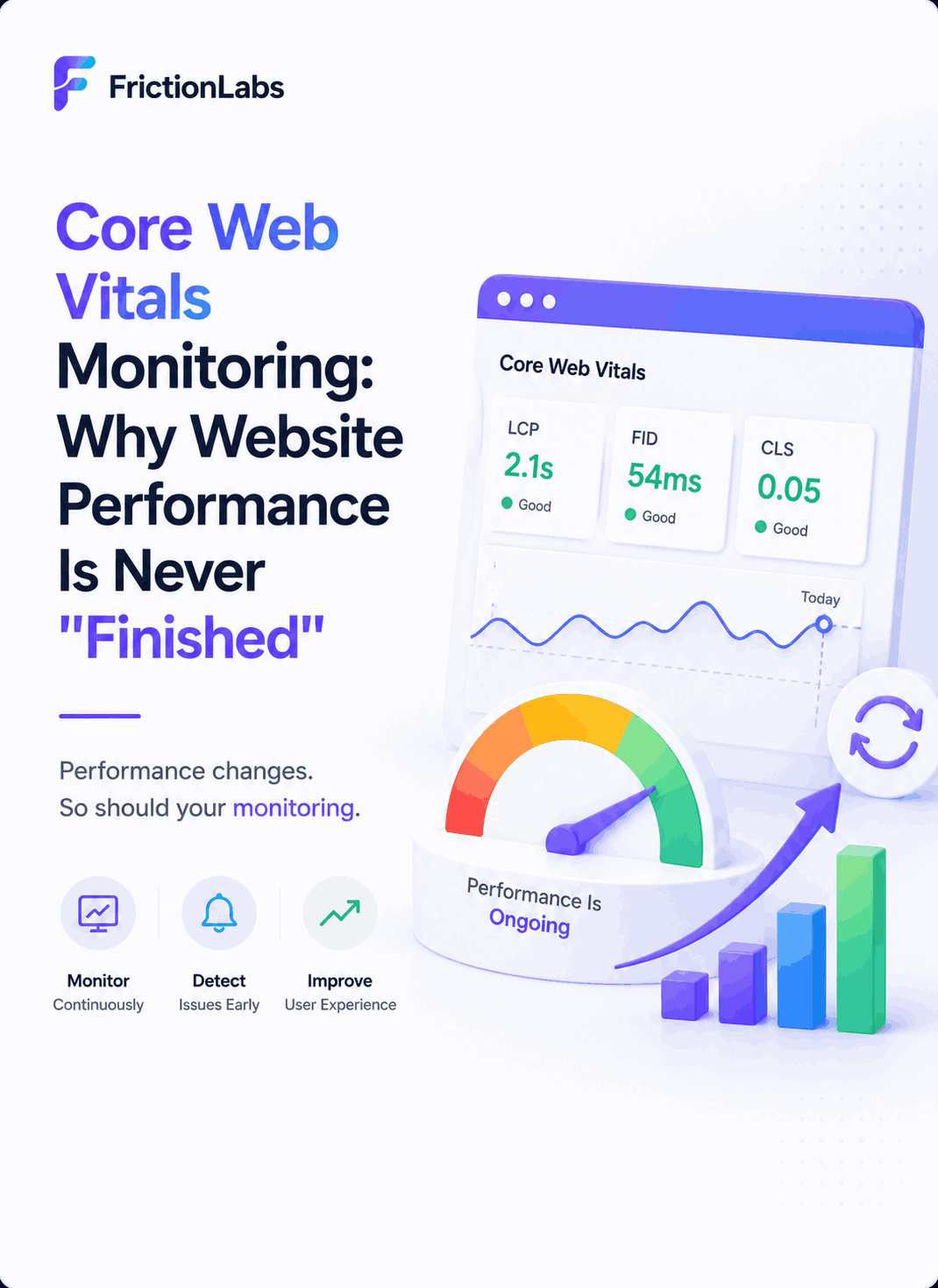
Friction Labs measures loading performance against Google's Core Web Vitals metrics, including Largest Contentful Paint (LCP), Interaction to Next Paint (INP), and Cumulative Layout Shift (CLS). Instead of simply displaying scores, it identifies the elements contributing to slower performance, making optimisation more targeted.
Rendering & Code Quality
Modern websites often rely heavily on JavaScript. Friction Labs checks how pages are rendered and highlights technical elements that may prevent search engines from correctly understanding or indexing content.
Structural Health
The platform reviews HTML structure, heading hierarchy, metadata, schema markup, broken links, and other technical components that influence search visibility.
By combining these diagnostics into a single workflow, Friction Labs helps teams maintain a healthy website without relying on manual audits.
From Reports to Actionable Insights
One of the biggest challenges with traditional SEO audits is knowing what to do next. Long lists of issues can be overwhelming, especially for teams with limited technical resources.
Friction Labs addresses this by generating structured remediation recommendations.
Rather than simply identifying an issue, the platform explains:
- What the problem is
- Why it matters
- How it affects SEO or user experience
- Which pages are impacted
- The recommended fix
This prioritised approach enables teams to focus on changes with the greatest potential impact.
Continuous Monitoring Instead of Reactive SEO
SEO issues rarely appear all at once. They often emerge gradually through website updates, plugin installations, or infrastructure changes.
Friction Labs includes automated monitoring that continuously checks configured websites for new technical problems.
If a structural issue is detected-such as a sudden increase in broken links, Core Web Vitals degradation, or unexpected page changes-the platform generates alerts so teams can investigate promptly.
This reduces the time between identifying and resolving problems, helping prevent long-term effects on organic performance.
Technical SEO Meets User Experience
Search engines increasingly reward websites that provide a smooth browsing experience.
Technical optimisation now extends beyond crawlability to include real user interactions.
This is where Friction Labs differentiates itself by combining technical diagnostics with behavioural insights such as Dynamic Heatmaps and Session Replays.
Instead of only reporting that a page has a high bounce rate, businesses can see how visitors interact with content, where they hesitate, and which elements may be creating friction.
Connecting technical health with user behaviour provides a clearer understanding of why certain pages underperform.
Preparing for AI-Powered Search
Search behaviour is changing rapidly with the growth of AI-powered search experiences, including Google AI Overviews, conversational assistants, and large language models.
While content quality remains essential, AI systems also rely on technically accessible websites that are easy to crawl, understand, and trust.
A technically optimised website is more likely to:
- Surface in AI-generated answers
- Support structured information retrieval
- Improve content discoverability
- Provide consistent signals across search platforms
By maintaining technical integrity, businesses improve their visibility not only in traditional search results but also in emerging AI-driven discovery channels.
Why Automated SEO Audits Save Time
Manual audits are valuable, but they can become time-consuming as websites grow.
Automation allows teams to:
- Detect issues earlier
- Monitor websites continuously
- Prioritise fixes
- Reduce repetitive manual work
- Improve collaboration between SEO specialists and developers
Instead of spending hours collecting diagnostic data, teams can focus on implementing improvements that drive measurable results.
Frequently Asked Questions
What is an automated technical SEO audit?
An automated technical SEO audit continuously scans your website for issues such as broken links, poor Core Web Vitals, crawl errors, missing metadata, and structural problems without requiring manual checks.
How often should I run a technical SEO audit?
For actively updated websites, continuous monitoring or at least weekly audits are recommended to detect issues before they affect rankings or user experience.
Does technical SEO affect Google rankings?
Yes. Technical SEO supports crawlability, indexability, page experience, and website performance-all of which influence organic search visibility.
Can technical SEO improve AI search visibility?
A technically sound website with structured content, strong performance, and accessible architecture is better positioned for AI-powered search experiences, including Google AI Overviews and other large language model-based discovery systems.