
How to Measure SEO Performance with Website Analytics
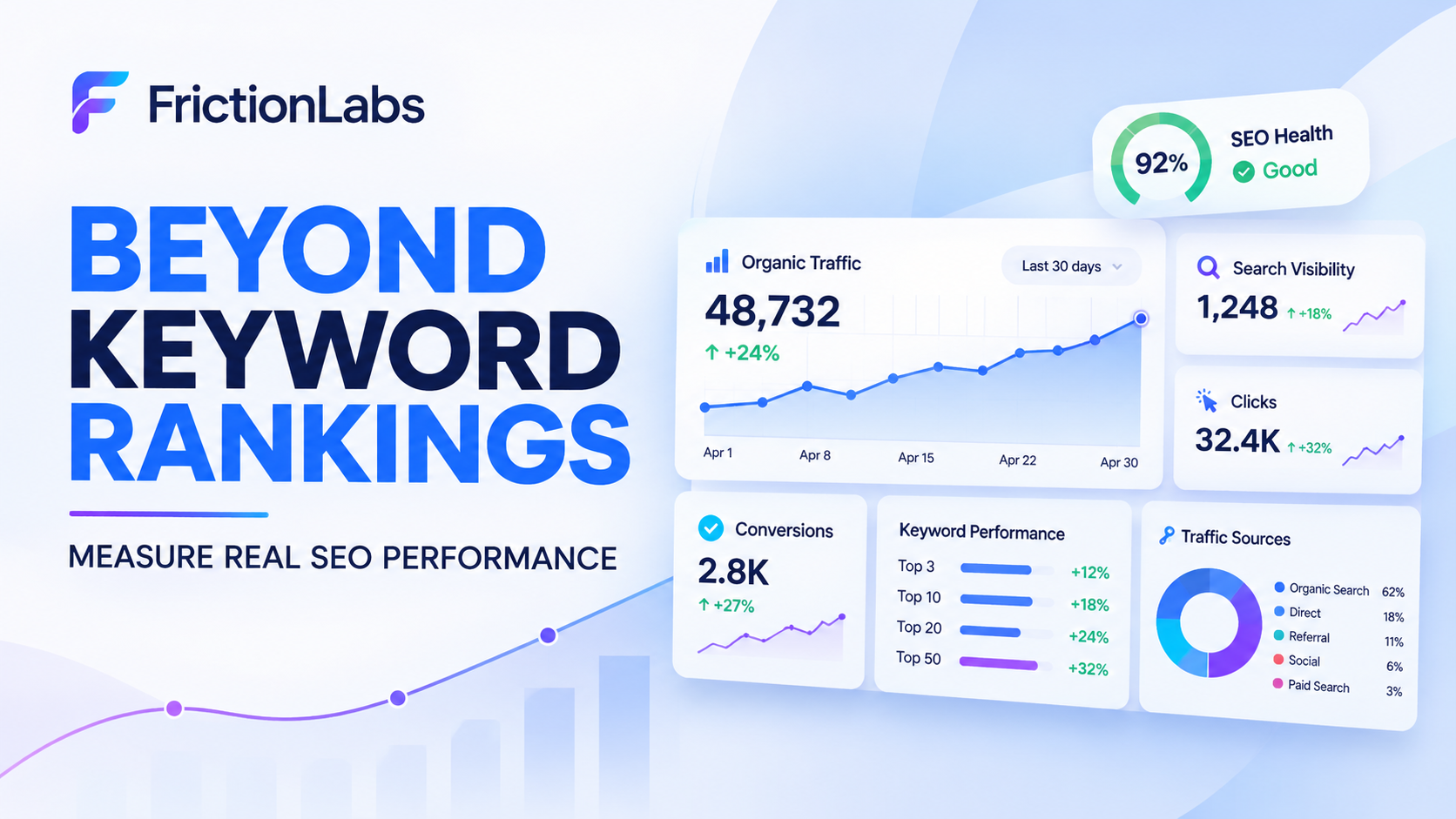
Beyond Keyword Rankings: How to Measure Real SEO Performance with Website Analytics
Search engine rankings are an important part of digital marketing, but they don't tell the complete story of how a website is performing.
A business might rank for several competitive keywords and receive thousands of website impressions, yet still struggle to attract relevant visitors, generate enquiries or achieve meaningful results.
This is why SEO performance tracking should go beyond keyword positions. Businesses need to understand how people discover their websites, what they do after arriving and whether their online presence is contributing to business goals.
By combining keyword ranking data, Google Search Console, Google Analytics 4 (GA4) and technical website monitoring, businesses can develop a much clearer understanding of their search performance.
In this guide, we'll explain which SEO metrics matter, how to interpret website analytics and how businesses can make better decisions using connected performance data.
What Is SEO Performance Tracking?
SEO performance tracking is the process of measuring how effectively a website attracts visitors through organic search and how well those visitors interact with its content.
It involves monitoring several important areas, including:
Keyword rankings and search visibility.
Organic website traffic.
Search impressions and click-through rates.
Website engagement and visitor behaviour.
Technical SEO health.
Conversions and business enquiries.
Instead of looking at individual metrics in isolation, businesses should consider how these measurements work together.
For example, improving keyword rankings may increase search impressions. However, if those impressions don't generate clicks, the website may need better page titles or descriptions. If visitors arrive but leave without taking action, the landing page experience may need attention.
Understanding these connections is what makes SEO performance tracking valuable.
1. Track Keyword Rankings and Search Visibility
Keyword rankings help businesses understand where their website appears in search engine results for relevant search queries.
Tracking keyword positions over time can reveal:
Which keywords are improving or declining.
Which pages are gaining search visibility.
Whether recent SEO changes are producing improvements.
Which search terms may offer new opportunities.
However, rankings should not be treated as the only measure of SEO success.
A website ranking highly for an irrelevant keyword may attract visitors who have little interest in its products or services. On the other hand, a page ranking lower for a highly relevant search term may still attract valuable potential customers.
What should businesses monitor?
Track relevant keywords, their ranking changes, search impressions and organic clicks. Look for improvements that bring the right audience rather than focusing entirely on achieving a higher position.
A keyword tracking platform such as Friction Labs' Rank Radar can help businesses monitor keyword performance and identify ranking movements.
2. Use Google Search Console to Understand Search Performance
Google Search Console is an essential resource for understanding how a website performs in Google Search.
It provides information about how often pages appear in search results, which queries generate impressions and how frequently users click through to a website.
Some important metrics include:
Impressions: How often your website appears in Google Search results.
Clicks: How many times users click your website from search results.
Click-through rate (CTR): The percentage of impressions that result in clicks.
Average position: The average position of your website or page for the selected search queries.
These metrics help identify opportunities that keyword rankings alone may not reveal.
For example, a page receiving many impressions but relatively few clicks may benefit from a more relevant page title, a clearer meta description or content that better matches search intent.
Monitoring these figures regularly helps businesses understand whether their search visibility is translating into website visits.
3. Analyse Website Traffic with Google Analytics 4
Google Search Console explains how people discover your website through search. Google Analytics 4 helps businesses understand what happens after visitors arrive.
GA4 provides insights into website traffic, engagement and important user interactions.
Some useful measurements include:
Organic search traffic: Visitors arriving through unpaid search results.
Engagement rate: The proportion of sessions that meet GA4's engagement criteria.
Engaged sessions: Sessions that meet the platform's engagement definition.
Landing page performance: How visitors interact with the pages where their sessions begin.
Conversions and key events: Actions that a business considers valuable, such as submitting an enquiry form or completing a purchase.
Consider this example.
A service business receives more organic traffic after publishing new content. However, enquiries remain unchanged.
Rather than assuming the SEO campaign has failed, the business should investigate which pages attract visitors, whether those pages match the search intent and whether visitors can easily find the next step.
This is how website analytics can turn traffic reports into practical decisions.
4. Monitor Technical SEO and Website Health
A website can have useful content and relevant keywords but still experience technical problems that affect its search visibility and user experience.
Technical SEO monitoring helps identify issues that may prevent search engines from crawling, understanding or indexing important pages.
Some common issues include:
Broken internal and external links.
Missing or duplicate title tags.
Missing meta descriptions.
Incorrect canonical tags.
Pages that cannot be indexed.
Slow-loading pages.
Mobile usability problems.
Core Web Vitals issues.
Missing structured data.
These issues should be reviewed regularly, particularly after website redesigns, new page launches or major development updates.
An automated website SEO audit can help businesses identify technical problems more consistently than relying on occasional manual checks.
Friction Labs' Site Analyzer is designed to help diagnose technical SEO issues, while Automated Signals supports ongoing monitoring for structural changes and performance concerns.
5. Understand the Relationship Between SEO and User Behaviour
Getting visitors to a website is only one part of the process. Understanding what they do next is equally important.
User behaviour can provide useful context when interpreting website performance.
For example:
Visitors repeatedly click an element that isn't clickable.
Important information is placed too far down a page.
A call-to-action button receives little attention.
Visitors leave during an enquiry or checkout process.
Mobile visitors experience navigation difficulties.
These observations may indicate opportunities to improve website usability and the visitor journey.
Website analytics can reveal where engagement is weak, while behavioural analysis can help teams investigate possible reasons.
The objective is not simply to increase traffic. It is to make the website more useful and easier for visitors to navigate.
6. Connect SEO Performance with Advertising and Social Media Data
Organic search is not the only channel contributing to digital visibility.
Businesses often use paid advertising and social media alongside SEO to attract audiences and generate enquiries.
However, when each channel is measured separately, it can become difficult to understand overall digital performance.
A more connected approach considers:
Organic search visibility.
Website traffic and engagement.
Social media reach and interactions.
Paid advertising performance.
Audience demographics.
Campaign results and advertising spend.
For example, a business may discover that a particular campaign generates significant website visits but relatively few meaningful actions.
Reviewing advertising performance alongside website analytics can help marketing teams investigate whether the campaign is reaching the right audience or sending visitors to an unsuitable landing page.
Friction Labs brings several of these capabilities into one platform, including Google Search Console and GA4 data connections, Meta advertising intelligence, social media performance tracking and audience insights.
7. Build a Consistent SEO Performance Monitoring Routine
SEO is not a one-time activity. Search visibility, website content, technical performance and visitor behaviour can change over time.
A regular monitoring routine helps businesses identify changes and respond before small issues become larger problems.
Here is a practical monitoring checklist:
Daily or regular checks
Review significant keyword ranking changes.
Monitor important website performance signals.
Check alerts for unexpected website changes.
Weekly checks
Review organic search clicks and impressions.
Identify pages gaining or losing visibility.
Check important technical SEO issues.
Review advertising campaign performance.
Monthly checks
Compare organic traffic with previous periods.
Review landing page engagement.
Evaluate conversions and key events.
Identify content and keyword opportunities.
Prioritise technical and user experience improvements.
The frequency should depend on website size, traffic levels and business requirements. The most important thing is to monitor meaningful changes consistently and take action when necessary.
How Friction Labs Helps Businesses Monitor Digital Performance
Managing SEO, website analytics, technical audits and advertising performance across separate tools can make it harder to understand the bigger picture.
Friction Labs is designed to bring important digital visibility and marketing performance capabilities into one unified workspace.
Its platform includes:
Site Analyzer: Technical website diagnostics and SEO health checks.
Rank Radar: Keyword position and search performance tracking.
Automated Signals: Alerts for structural website changes.
Google Search Console and GA4 integrations: Connected search and website analytics data.
Meta Ads Analyzer: Advertising intelligence and campaign monitoring.
Audience Finder: Audience and demographic insights.
Social Media Performance Dashboard: Social reach and engagement monitoring.
AI SEO and Ad Copy Copilot: Assistance with SEO metadata and advertising copy.
By bringing these capabilities together, Friction Labs helps businesses and marketing teams understand important performance signals, identify opportunities and make more informed digital marketing decisions.
Explore the platform at Friction Labs.
Conclusion
Successful SEO is about more than achieving higher keyword rankings. It requires a clear understanding of how people discover a website, how they interact with its pages and whether that activity contributes to meaningful business outcomes.
By combining keyword ranking tracking, Google Search Console, Google Analytics 4, technical SEO monitoring and advertising insights, businesses can develop a more complete picture of their digital performance.
The goal should be to move beyond isolated reports and build a consistent process for measuring, understanding and improving website performance.
With the right data and monitoring approach, businesses can make more informed decisions and create a stronger foundation for long-term online visibility.
Frequently Asked Questions
1. How do you measure SEO performance?
SEO performance can be measured using keyword rankings, organic traffic, search impressions, clicks, click-through rate, website engagement, conversions and technical SEO health.
2. What are the most important SEO metrics to track?
Important SEO metrics include organic clicks, search impressions, keyword positions, click-through rate, organic landing page performance, conversions and website technical health.
3. What is the difference between Google Search Console and Google Analytics 4?
Google Search Console measures how a website performs in Google Search, including impressions, clicks and search queries. Google Analytics 4 measures what visitors do after arriving on the website, including engagement and key events.
4. Why is keyword ranking tracking important?
Keyword ranking tracking helps businesses understand their search visibility, monitor ranking changes and identify opportunities to improve the performance of relevant website pages.
5. How often should a website undergo an SEO audit?
The frequency depends on the website's size, complexity and rate of change. Regular automated monitoring combined with more detailed periodic audits can help identify technical SEO problems.
6. Can website analytics improve SEO performance?
Yes. Website analytics can help businesses identify underperforming landing pages, understand visitor engagement, evaluate conversions and discover opportunities to improve the overall website experience.
7. What is an SEO performance monitoring platform?
An SEO performance monitoring platform helps businesses track search visibility, keyword positions, website health and other digital performance signals. Some platforms also connect analytics and advertising data to provide a broader view of online performance.
8. How does Friction Labs help with SEO performance monitoring?
Friction Labs brings together capabilities such as technical SEO analysis, keyword tracking, Google Search Console and GA4 integrations, automated signals and advertising intelligence to help businesses monitor and understand their digital performance.